 |
|
|
|
|
|
|
|
|
|
|
|
|
|
 |
 |
 |
 |
 |
 |
 |
 |
 |
 |
 |
 |
 |
|
 |
|
|
|
|
|
|
 |
 |
 |
 |
 |
 |
|

Thursday Art group - Session 10
< back | Session Menu | Session 10 - Watercolour 2
In this session we continued to work with watercolour and class were asked to bring glass or items with reflective surfaces.

Stan brought a brushed stainless steel coffee maker with a slightly reflective finish. After sketching the proportions, he carefully applied his watercolour, concentrating on the object more than the medium.
Top
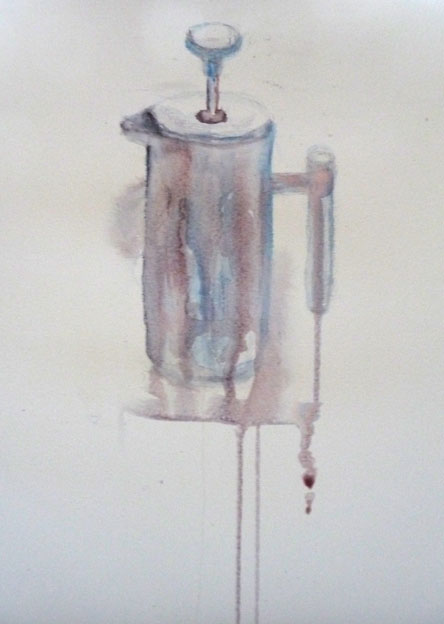
After
some discussion about being freer with the watercolour, he relaxed control
and started to allow the medium to impose its nature over the object,
giving some pleasing fluid effects.
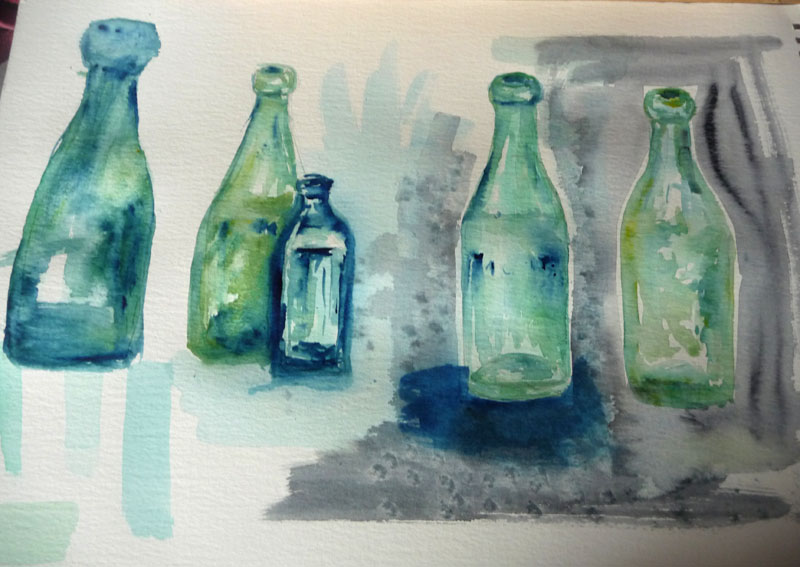
Lorraine
has embraced the use of watercolour over the last two sessions and her
treatment of the glass reflects this. Initially, there was some tentative
application of muted colours, but after some re-evaluation and bolder
execution, the bottles began to come alive, expressing the qualities obtainable
through floating pigment on water.
Top

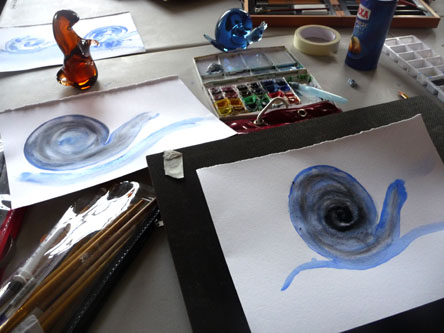
Kathy dedicated her time to experimenting with the spiral form
of her glass snail. We discussed floating pigment on water, mixing pigment
and then applying it in washes, dabbing water and pigment off the paper
and then applying stronger pigment followed by water.
Rebecca was also present and used Kathy's other glass figure (shown
above) as one of her subjects. However, she struggled to embrace the watercolour
technique and preferred not to have her results shown on this occasion.
One of the aims of the art class, is to offer a wide variety of mediums
and techniques which can be applied to an individual's art and through
this process, artists develop their preferences.

Vee used a large glass vase as her main subject and initially applied her watercolour in a delicate and somewhat tentative way. By gradually building up layers of muted colour, greater depth and reflection started to appear. Looking at the image at the time of up-dating the website, I feel that the back inside area of the top right of the vase could benefit from a horizontal direction of brush strokes.
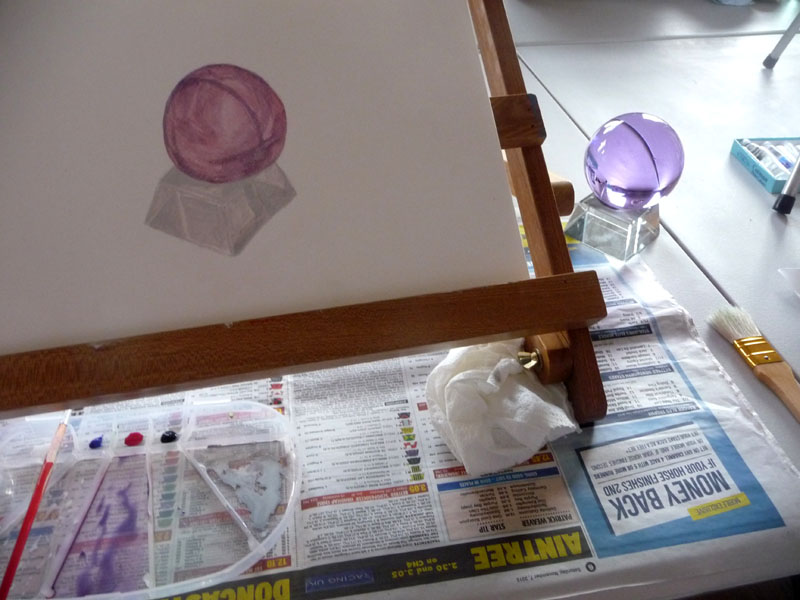
Tracy sketched the outlines of her objects in pencil, adding a bit more detail than she needed - so I suggested some light rubbing out before painting. Capturing the purple colour of the glass, with the pigments Tracy had available, proved to be difficult, but the qualities of reflected light within the glass, particularly in the base, began to work well.
When artists work regularly with certain subjects, for example, landscape, they will often buy ready-made pigment colours that are closer to the colours they need to produce consistently.
Techniques
discussed
Loading brushes with more water.
Marking shapes in water before adding pigment.
Adding pigment before applying water.
Over-painting edge lines and then adding water within the line so that
pigment would bleed into the inner areas.
Applying pigment washes and dabbing to remove excess.
Using water washes and dabbing, to remove excessive areas of pigment.
Suggestions
and observations
Letting go of control - allowing water and pigment to flow freely.
Not being afraid to make 'mistakes'.